Three ways to use MT-32 sounds today
The Roland MT-32 can live on in a modern computer in several very different ways.
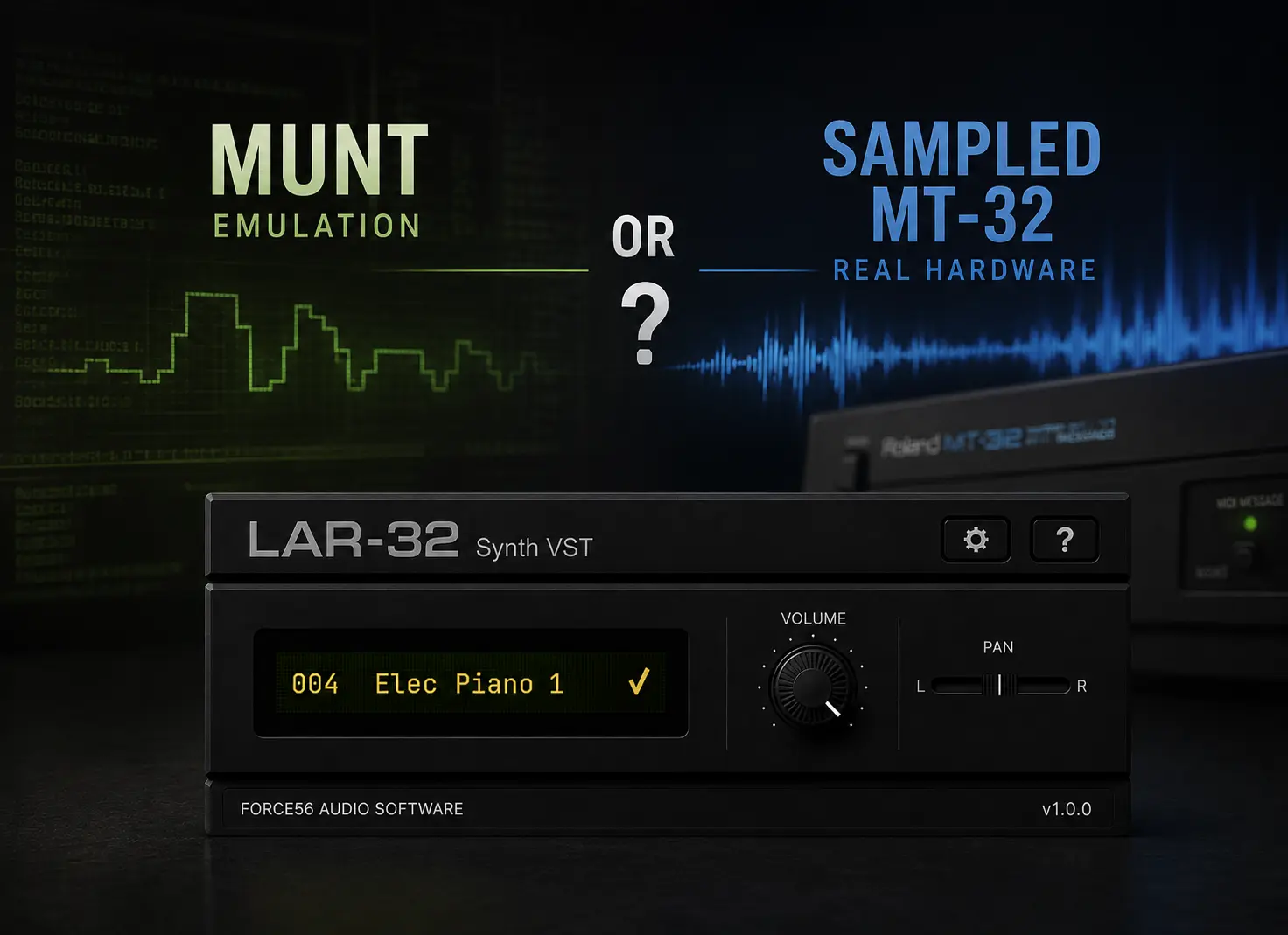
You can emulate the original hardware, use audio samples captured from an MT-32, or load a SoundFont based on its sounds.
All three approaches can provide access to the character of the MT-32, but they are not technically equivalent — and they are useful for different workflows.
MT-32 emulation
Emulation attempts to recreate the original synthesizer itself in software.
Projects such as MUNT reproduce the behavior and sound generation of Roland's LA synthesis hardware rather than simply playing recordings of its output.
This makes emulation especially useful for retro computing, classic game soundtracks, preservation, and situations where original MT-32 behavior matters.
The trade-off is setup. Authentic MT-32 emulation typically requires the appropriate ROM files and an environment configured around the emulator.
MT-32 samples
Sampling takes the opposite approach: instead of recreating how the MT-32 generates a sound, you record the sound produced by real hardware.
Those recordings can then be loaded into a sampler or packaged inside a dedicated virtual instrument.
This approach is particularly convenient for music production because the original synthesizer architecture no longer needs to be recreated. The hardware has already produced the sound.
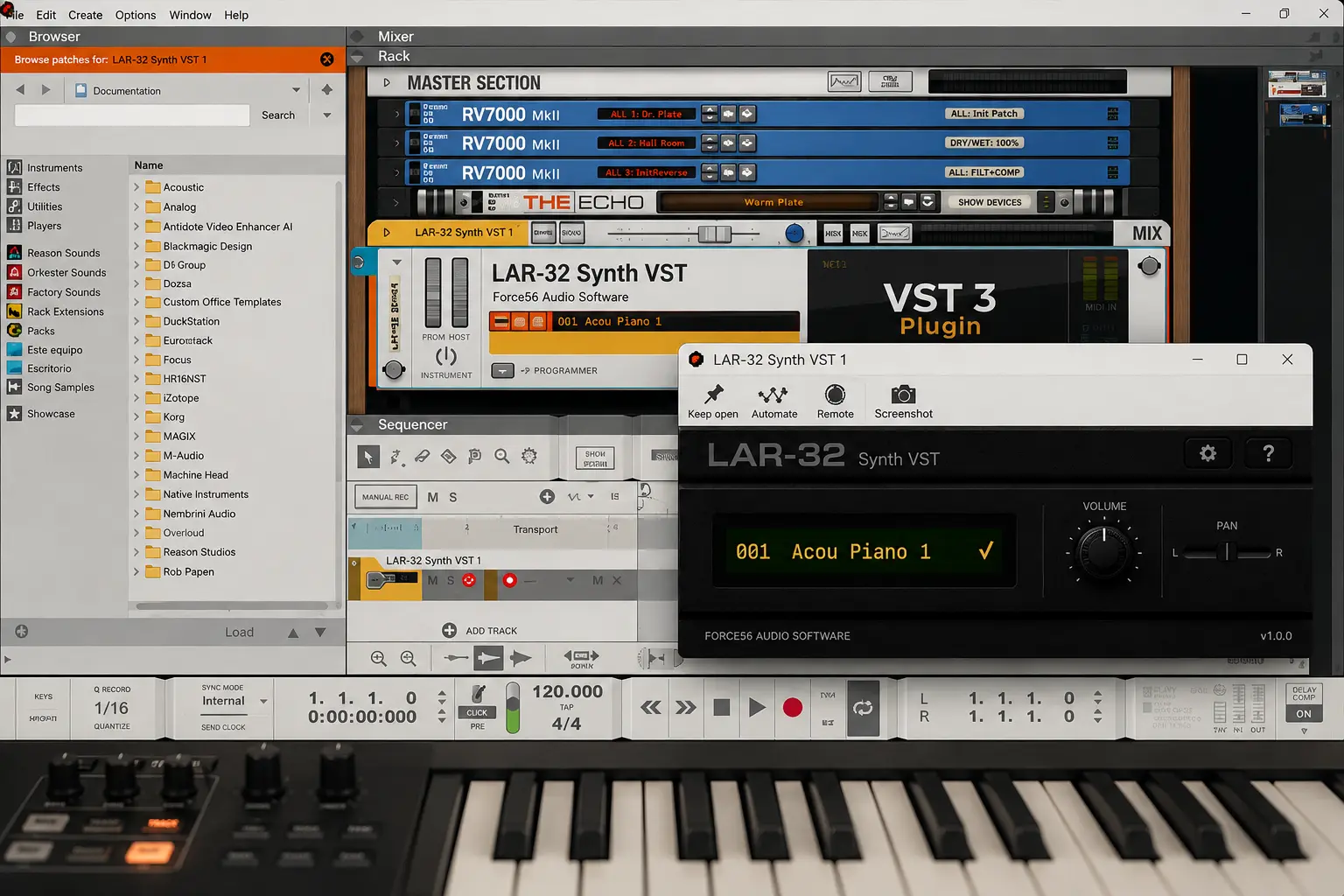
A sampled instrument can therefore focus on a familiar plugin workflow: load a preset, play it from MIDI, add effects, automate parameters, and save everything with your DAW project.
MT-32 SoundFonts
A SoundFont is also sample-based, but packages samples and instrument mappings into a standardized format such as SF2.
SoundFonts can be lightweight and convenient, and many software samplers can load them directly.
Their capabilities depend heavily on the SoundFont itself and the player being used. Compared with a dedicated virtual instrument, you may have fewer purpose-built controls, a less specialized interface, and a workflow determined largely by your SoundFont player.
What's the difference?
Emulation recreates the synthesizer. Samples and SoundFonts reproduce recordings of sounds it has already generated.
| Approach | What it does | Best suited for |
|---|---|---|
| Emulation | Recreates the original synthesizer in software | Retro software, preservation, authentic hardware behavior |
| Samples | Plays recordings captured from hardware | Modern DAW production and straightforward preset playback |
| SoundFonts | Packages samples and mappings in a portable format | General-purpose samplers and lightweight setups |
Which approach should you choose?
Choose emulation when reproducing the original MT-32 environment is important.
Choose raw samples or SoundFonts when you want portability and already have a sampler workflow you like.
Choose a dedicated sampled instrument when you primarily want MT-32 sounds behaving like a conventional modern plugin inside your DAW.
None of these approaches makes the others obsolete. The best choice depends on whether your priority is hardware behavior, portability, or production workflow.
Prefer a dedicated sampled MT-32 workflow?
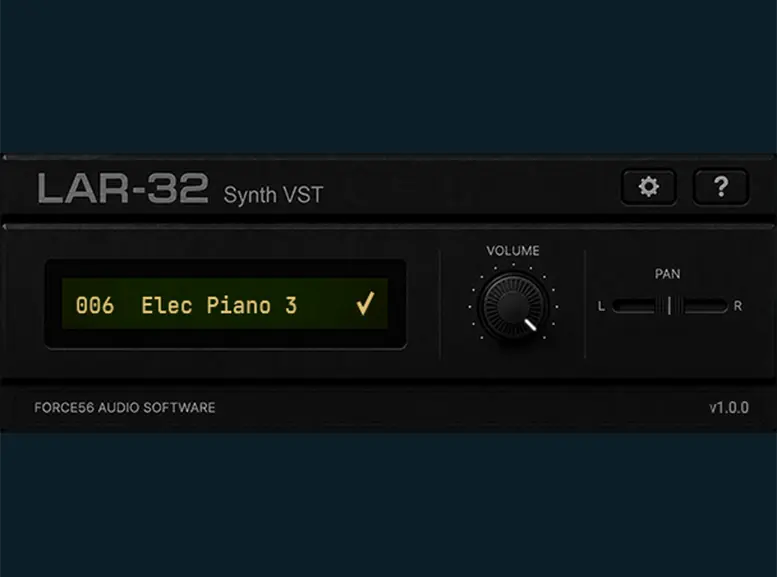
LAR-32 Synth VST takes the dedicated sample-based approach. Its tones were captured in stereo from real Roland MT-32 hardware and packaged into a virtual instrument designed for modern music production.
- Real MT-32 hardware captures
- No external ROM files required
- Windows + macOS
- VST3 • AU • Standalone